
Why Singapore Is Becoming Asia's Most Strategic Home for Longevity and Wellness Founders
If you are building a longevity or wellness business in Asia, the window of opportunity in Singapore has never been wider. Here is why the smartest founders are choosing to build here, and what makes an integrated ecosystem the competitive advantage most are still overlooking.
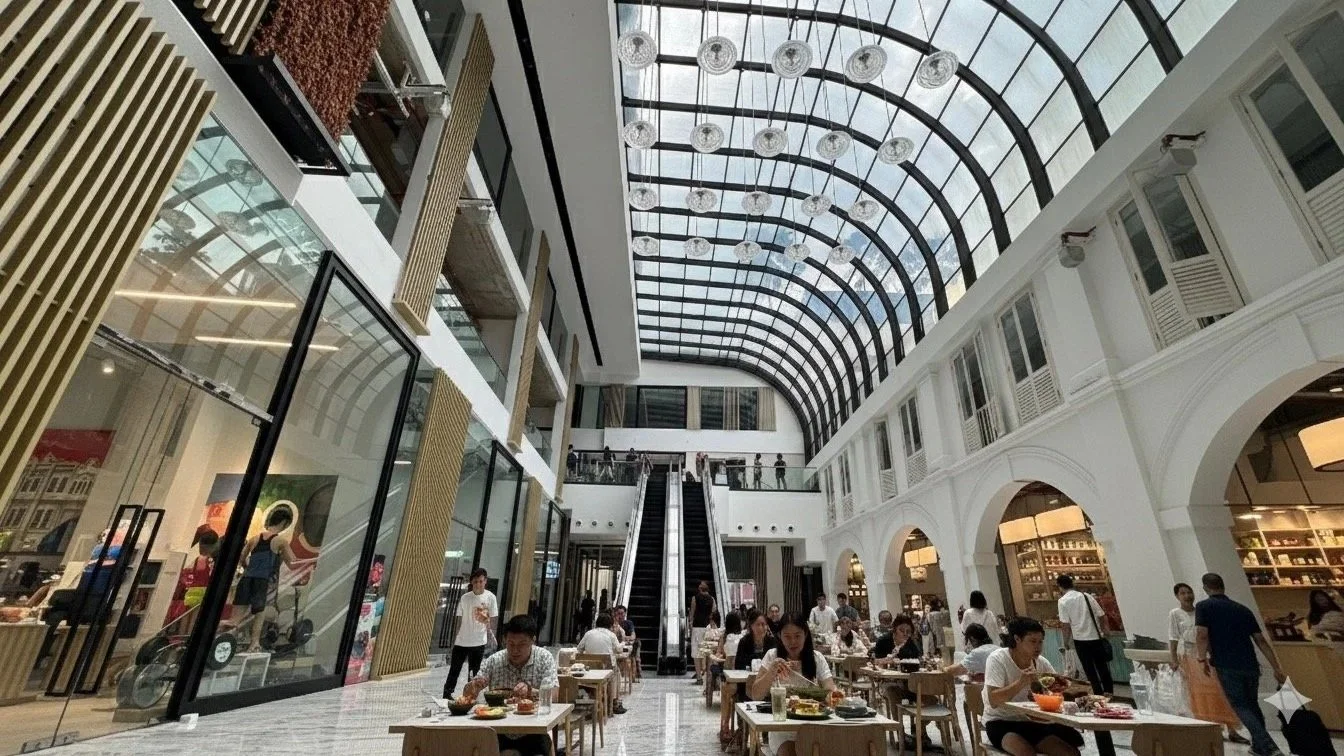
Singapore is primed to be the next boom in the longevity economy
The Longevity Economy Is No Longer a Niche. It Is Infrastructure.
Something fundamental has shifted in the way the world thinks about health, and it is reshaping where capital, talent, and consumer demand are heading.
The global wellness economy now exceeds USD 6 trillion in value. Within that, the longevity-focused segment alone is forecast to approach USD 610 billion by 2026. Asia-Pacific is the fastest-growing region for longevity investment, expanding at over 10 per cent annually as ageing populations and rising affluence create sustained demand for preventive health services, personalised medicine, and integrated wellness experiences.
This is not a trend driven by hype. It is driven by demographics, policy, and a generational shift in how people define health. Younger consumers in particular are moving away from reactive healthcare toward measurable, preventive, science-backed approaches. Nearly 30 per cent of Gen Z and millennial consumers now prioritise wellness significantly more than they did just a year ago, and they increasingly seek products and services that deliver measurable outcomes, from biological age markers to clinical-grade diagnostics.
The longevity economy is valued at USD 8 trillion and projected to reach up to USD 12 trillion by 2030. The consumer mindset has shifted from living longer to living better for longer. Health is no longer a line item. It is becoming identity. And the infrastructure required to serve that shift is still catching up.
For founders and operators in this space, the question is no longer whether longevity will become a mainstream category. It already has. The real question is where to build.
Why Singapore, and Why Now
Singapore sits at the intersection of nearly every force accelerating the longevity economy.
Start with demographics. Over 20 per cent of Singapore's citizen population is now aged 65 and above, a figure that has risen from 13.1 per cent just a decade ago. By 2030, roughly one in four citizens will be in this age group. Singapore has crossed the threshold into a "super-aged" society, and the government recognises that preventive health infrastructure is no longer optional.
That recognition has translated into action. The Healthier SG programme represents one of the most ambitious national preventive health strategies in the region. It subsidises screenings, vaccinations, and chronic care management while incentivising behavioural change at the population level. Alexandra Hospital recently opened a dedicated Healthy Longevity Clinic, offering epigenetic profiling and lifestyle-guided interventions. Singapore even hosted the 2025 Founders Longevity Forum, bringing together global leaders to shape the sector's direction.
Then consider spending power. Singapore's per-capita wellness expenditure sits at approximately USD 2,898, more than four times the global average of USD 706 and more than seven times the Asia-Pacific average of USD 399. The country's broader health and wellness market reached USD 18.8 billion in 2025 and is projected to more than double to USD 42.5 billion by 2034.
Singapore has also earned a distinction that no other country holds. The Global Wellness Institute named it the world's first "Blue Zone 2.0," a country that has engineered improved healthspan and longevity through deliberate government policy rather than traditional lifestyle factors alone. Life expectancy has risen from 72 years in 1980 to 83 years today.
For founders evaluating where to plant roots, these signals are hard to ignore. This is a market with affluent, health-literate consumers who already spend more per capita on wellness than nearly any other population in the region. A government that actively builds preventive health infrastructure and funds longevity research at the national level. A regulatory environment that supports medical innovation and biotech commercialisation. And a geographic position that serves as a gateway to the broader ASEAN and Asia-Pacific region, home to the fastest-growing concentration of older adults and wellness consumers on the planet.
Private longevity clinics are already thriving here. Public hospitals are integrating longevity diagnostics into their services. And a 2019 industry report identified over 100 longevity companies and 80 active investors in Singapore, a number that has only grown since.
The ecosystem is forming. The question is whether you build within it, or beside it.
The Problem Most Founders Still Face
Despite these tailwinds, most longevity and wellness founders in Singapore operate in isolation.
A preventive medicine clinic opens in one part of the city. A movement and performance studio launches in another. A nutrition-led concept finds its footing somewhere else entirely. Each one serves part of the longevity equation, but none of them benefit from the others.
This fragmentation is the single biggest structural disadvantage in the wellness industry. It forces founders to build brand awareness, trust, and foot traffic from scratch, competing against every other isolated operator for the same health-conscious consumer. It also limits clinical and operational outcomes. A preventive medicine practitioner cannot easily coordinate with a movement specialist or nutritionist when they operate in entirely separate locations with no shared infrastructure.
It also fails the consumer. The person who sees a longevity physician in the morning should not need to cross the city for a recovery session in the afternoon, then navigate to a separate location for conscious nutrition. These disciplines are interconnected. The evidence base for integrated, multi-disciplinary health interventions is growing rapidly. Lifestyle interventions that combine physical activity, nutrition, and clinical oversight have been projected to save hundreds of millions in healthcare costs over the coming decades in Singapore alone. Yet the physical infrastructure to support that integration barely exists.
The market has the demand. The science supports the model. What has been missing is the environment that makes integration possible at the ground level.
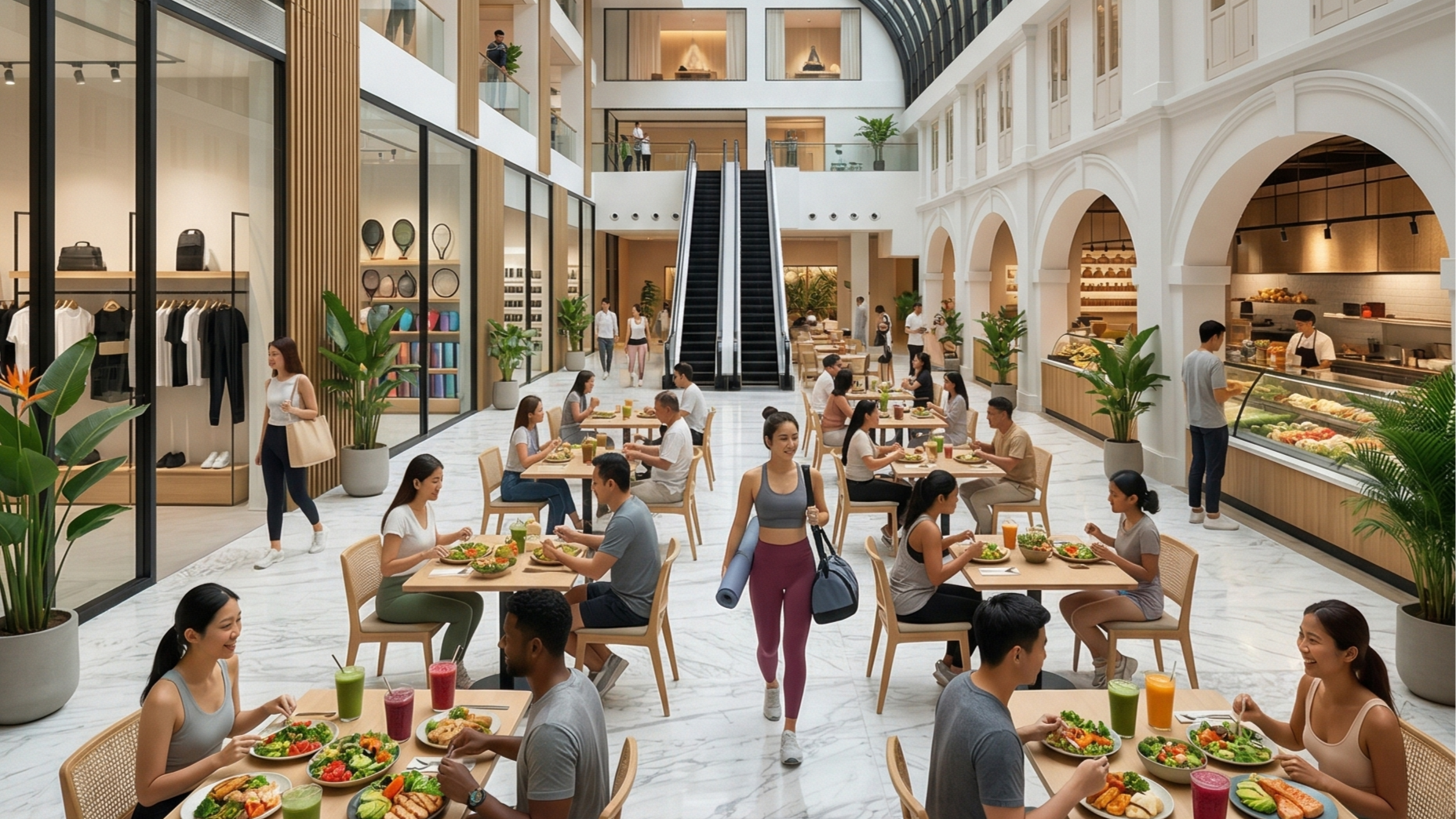
An ecosystem of complementary longevity businesses benefits consumers and founders alike
What Integration Actually Looks Like for a Founder
The most successful wellness ecosystems in the world share a common trait. They bring complementary disciplines into proximity, so that trust compounds, referral pathways form organically, and the consumer experiences health as a connected system rather than a series of isolated transactions.
For a longevity medicine practitioner, integration means operating alongside movement specialists, recovery brands, and nutrition-led concepts whose work reinforces your outcomes and vice versa. Your patients do not disappear into fragmented care. They move through an ecosystem that supports the full spectrum of healthspan.
For a conscious F&B founder, integration means building your brand within a community that already values what you stand for. Your customer base is not assembled from scratch. It walks through the door because the environment has already attracted people who care about nutrition, vitality, and long-term health.
For a fitness or movement brand, integration means adjacency to medical credibility and lifestyle context. You are not just a gym. You are part of a health platform where movement is understood as medicine.
This is not a theoretical model. It is the operational logic behind every category-defining wellness destination that has scaled successfully. Environment shapes behaviour. Adjacency builds trust. Shared foot traffic lowers customer acquisition costs. And founders who co-locate within purpose-built ecosystems consistently outperform those who operate alone, because they inherit the credibility and momentum of the platform itself.
Longevity World Singapore: Singapore's First Longevity Ecosystem
This is precisely the opportunity that Longevity World Singapore was built to create.
Located at 10 Coleman Street in the Civic District, Longevity World Singapore is Singapore's first ever longevity hub, a curated, integrated destination that brings together practitioners, founders, and brands across the core pillars of long-term health: preventive medicine, longevity medicine, movement, nutrition, recovery, and lifestyle.
This is not a conventional commercial development. It is an ecosystem, designed from the ground up to support the kind of cross-disciplinary synergy that makes longevity care actually work. Every brand within the ecosystem reinforces the others. Every practitioner benefits from the trust and traffic that the platform generates collectively.
The positioning is deliberate. Longevity World Singapore does not market itself as a space to lease. It operates as a platform for founders and practitioners who are shaping the future of long-term health. The earliest participants are not tenants. They are ecosystem pioneers, invited to help define what integrated longevity living looks like in Asia's most strategically positioned wellness market.
Who This Ecosystem Is Designed For
Longevity World Singapore is actively building its founding community across several key categories:
Preventive and longevity medicine clinics offering diagnostics, age management, and personalised health programmes.
Movement and performance brands, from functional fitness to physiotherapy to strength and mobility training.
Nutrition-led concepts, including conscious F&B, clinical nutrition, and functional food brands.
Recovery and performance brands spanning cryotherapy, IV therapy, hyperbaric treatments, and regenerative modalities.
Lifestyle and wellness brands, including premium skincare, athleisure, holistic health, and mindfulness-led concepts.
If your work sits at the intersection of science-backed health and everyday living, this ecosystem was designed with you in mind. You are not looking for generic commercial space. You are looking for alignment, credibility, community, and a platform that positions your brand within a category-defining movement.
The Case for Moving Early
There is a reason the concept of a "Founders Circle" defines the first phase of Longevity World Singapore. The founders who enter the ecosystem early do not just occupy space within it. They shape it.
Early participants influence the ecosystem's character, its referral dynamics, and its cultural identity. They benefit from the concentrated marketing, thought leadership, and category-building work that the brand invests in across LinkedIn, media, and digital channels. And they gain the strategic advantage of being associated with a first-mover platform in a market that is only accelerating.
Singapore's longevity economy is not slowing down. The consumer base is growing, the government is investing through initiatives like Healthier SG and Age Well SG, and the global capital flowing into this sector continues to compound. Research published in Nature Aging projects that Singapore's ageing population will drive significant increases in chronic disease prevalence and healthcare demand through to 2050, reinforcing the case for preventive, integrated health models.
What remains scarce is the physical, curated infrastructure that brings it all together.
Longevity World Singapore is building that infrastructure. The question for founders is not whether this category will grow. It is whether you will be part of the ecosystem that defines it.
Next Steps
If you are a founder, practitioner, or brand operating in the longevity and wellness space, we invite you to explore what a home within Singapore's first longevity ecosystem could mean for your business.
Learn more at longevity.world/singapore