
The Bright Future of Singapore’s Longevity Economy
What is driving it, and what comes next?
Longevity used to sound like something reserved for elite athletes, Silicon Valley biohackers, or people chasing extreme routines.
That is changing fast.
In Singapore, longevity is becoming more practical, more mainstream, and more tied to everyday living. People want to feel energetic, stay mobile, manage stress, sleep better, and reduce long term health risks. They want solutions that fit into busy schedules and that feel trustworthy.
At the same time, Singapore is shifting as a system. National strategies are placing more emphasis on preventive health and healthy ageing. That creates a strong tailwind for the wellness and longevity economy because it encourages people to engage earlier and more consistently, not only when they are already unwell.
This is why the future looks bright. Not because longevity is a trend, but because the conditions that create sustained demand are strengthening.
Singapore is moving from treatment to prevention, and demand is shifting with it
One of the biggest reasons the longevity economy is growing is simple. Singapore is actively pushing healthcare upstream. Healthier SG is a national initiative focused on preventive health. It aims to help people take proactive steps, manage their health, and prevent chronic disease, with support anchored around a trusted family doctor and community programmes.
That matters for the wellness economy because prevention is not a one off purchase. It is a pattern.
When prevention becomes the priority, demand increases for services that support consistency, such as:
• Movement and strength building
• Nutrition support and behaviour change
• Stress management and recovery
• Sleep quality and daily routines
• Health screenings that guide lifestyle decisions
Singapore is also strengthening its healthy ageing blueprint. The Action Plan for Successful Ageing is a whole of nation approach to help seniors age well, with initiatives spanning health, social support, employment, and the built environment.
Put these together and you get a clear signal. The market is being guided toward long term health habits, not just reactive medical care.
The longevity economy is not one industry, it is a connected set of sectors
People often talk about “the wellness market” as if it is one thing. In reality it is a stack of sectors that meet different needs, and the strongest growth happens when these sectors connect.
Here are the major parts of the longevity and wellness economy that are expanding in Singapore.
Wellness and preventive care
This includes health screening, diagnostics, primary care pathways, lifestyle coaching linked to clinical oversight, and recovery focused services that sit close to medical care.
The important shift is not “more clinics”. It is more people who want clarity and guidance earlier, then want practical support to act on it.
Movement, mobility, and strength
Movement is becoming the most obvious longevity lever for the average person.
The growth areas are not only gyms. They include mobility training, pilates, strength for beginners, physio adjacent performance support, posture and pain management, and recovery services that help people stay consistent.
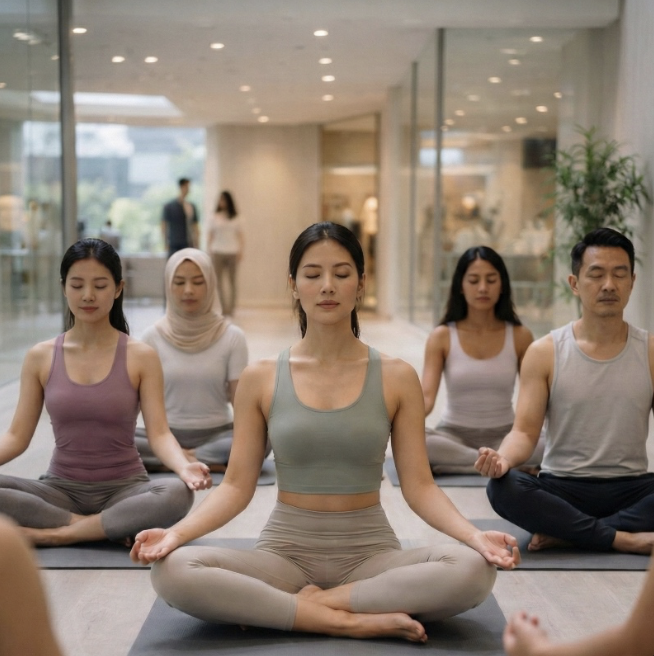
Mental wellness, mindfulness, and stress recovery
Singapore is a high performance environment. Stress is common, sleep is often compromised, and many people want tools that feel grounded and structured.
Demand is growing for mindfulness, breathwork, guided recovery, sleep support programmes, and calm environments that make people feel safe and unjudged.
Nutrition and metabolic health
Nutrition is no longer only about dieting. People want sustainable eating that supports energy, weight management, and long term health.
That fuels growth in health focused dining concepts, personalised nutrition support, education driven programmes, and practical habit building that does not rely on willpower alone.
Lifestyle products and consumer brand
This includes wearables, athleisure, skincare, and lifestyle retail that aligns with a health forward identity.
Singapore is strong here because consumers tend to value quality, trust, and proven brands, especially when the offering feels premium and evidence based.
Wellness tourism and destination experiences
Wellness travel is rising across the region, and Singapore is positioning itself to benefit. Singapore Tourism Board has stated its interest in developing wellness tourism, and the broader tourism rebound supports premium experiences and higher spending.
Why Singapore is well positioned to lead in Asia
Many cities want to be a wellness hub. Singapore has a few practical advantages that make it more likely to succeed.
Trust and standards
Trust is a hidden growth driver.
When people are spending money on health related services, they care about credibility. Singapore’s reputation for regulation, safety, and high service standards makes it easier for wellness offerings to scale with confidence.
Density and convenience
Singapore is time poor. Convenience matters.
Dense, connected neighbourhoods make it easier to build repeat behaviour. People are more likely to stick to routines when services are easy to reach and clustered near where they already work, commute, and spend time.
Strong national focus on ageing well
Singapore is not waiting for the ageing wave to become a crisis. It is planning around it, and that planning supports long term demand for active ageing and preventive health behaviours.
Tourism, spending power, and premium experiences
Singapore is seeing strong tourism performance, and that brings additional demand for premium, well designed experiences. For 2025, Singapore reported 16.9 million international visitor arrivals, and tourism receipts from January to September 2025 were on track to exceed full year projections.
This matters because wellness and longevity are increasingly tied to experience. People want environments that feel curated, safe, and high quality.
The next growth wave is ecosystems, not standalone services
Here is where the longevity economy becomes more interesting.
As the market matures, people will not want to manage ten separate providers across the city. They want trusted environments where the pieces connect.
This is why wellness ecosystems will grow faster than isolated operators.
What an ecosystem changes for consumers
An ecosystem makes healthy behaviour easier to maintain because it reduces friction.
Instead of searching endlessly, comparing options, and losing momentum, people can move through a more coherent journey, such as:
• Assess, understand baseline, set goals
• Start movement and recovery support
• Improve nutrition and routines
• Add mindfulness and sleep support
• Check progress and adjust
• Stay consistent because the environment supports it
It is not about doing more. It is about building a system that helps you keep going.
What an ecosystem changes for operators
For wellness brands, ecosystems create three advantages.
Credibility by adjacency
When reputable operators sit near each other, trust increases. People are more willing to try new services because the environment signals quality.
Better customer lifetime value
If a customer solves one problem, they often discover the next. Ecosystems allow for natural progression, and that keeps customers engaged for longer.
Cross traffic and referrals
Not the spammy kind. The natural kind. When services are aligned, customers move between them.
This is especially important in a market where customer acquisition costs can rise quickly. Ecosystems can reduce the need for constant paid marketing because the environment itself supports discovery.
What this means in Singapore over the next 3 to 5 years
If you are wondering where this is heading, here are the most likely shifts.
Preventive pathways become more normal
Healthier SG is designed to strengthen preventive care and patient doctor relationships, supported by community partners. Over time, this should encourage earlier engagement, better follow up, and more demand for lifestyle support services that help people stick to plans.
Evidence led wellness grows faster than vague wellness
Consumers are becoming more informed. They want clear reasoning, measurable progress, and providers who can explain what they do in plain language.
That does not mean everything must be clinical. It means the market will reward clarity, safety, and structured programmes.
High trust hubs become the default
As more providers enter the market, people will look for filters. Not more choices.
The winners will be places that feel curated and coherent, where the experience is designed for long term adherence, not quick fixes.
Opportunity map, where demand is likely to concentrate
The longevity economy grows where real life problems are common and solutions feel achievable.
High intent consumer journeys
In Singapore, demand is likely to concentrate around journeys like:
• Stress and burnout recovery
• Sleep improvement and daily energy
• Weight management and metabolic health support
• Mobility, pain, and injury prevention
• Strength building for beginners and busy professionals
• Healthy ageing and staying independent
• Performance support for active lifestyles
High fit operator categories
For potential tenants and operators, the highest fit categories usually share a few traits. They support repeat behaviour, they can integrate with adjacent services, and they deliver visible value over time.
Examples include:
• Preventive health and screening aligned providers
• Physio, recovery, and mobility focused services
• Strength and movement studios with structured programmes
• Mindfulness, breathwork, and stress recovery concepts
• Nutrition support, education, and nutrition forward dining
• Lifestyle retail that aligns with wellness identity
• Beauty and skincare concepts that fit a long term wellness narrative
How Longevity World fits the future, as a practical ecosystem model
This is where Longevity World becomes more than a concept.
As Singapore’s longevity economy grows, what the market needs is not another scattered set of providers. It needs intentional infrastructure. A place designed to bring aligned operators into one coherent environment.
Longevity World’s pillars are built for that. Holistic Wellness, Mindfulness, Movement, Medi-wellness, Nutrition, and Lifestyle. Together, they map to how people actually live and make health decisions, not how industries like to organise themselves.
For consumers, this means a simpler journey. For operators, it means an environment that supports trust, cross discovery, and long term retention.
For potential tenants, the opportunity is not only footfall. It is quality footfall. People who are already primed to invest in their health, and who are more likely to become long term clients because they are in the right environment.
This is also why early operators matter. When early tenants set a high standard, the ecosystem becomes stronger faster. It creates a clear signal to the market about what belongs in the space, and what does not.
Conclusion, longevity is becoming everyday infrastructure
Singapore’s longevity and wellness economy is growing because the fundamentals are strong.
• National strategy is pushing prevention and healthy ageing.
• Consumers are shifting toward long term health habits, not short term fixes.
• Tourism and premium experience demand are supporting high quality wellness offerings.
• The market is moving toward ecosystems that make healthy living easier to sustain.
The future looks bright because longevity is becoming practical. It is becoming part of how people design their lives.
And in that future, the winners will be the environments that make the right choices easier, consistently.
Frequently Asked Questions
What is the longevity economy
It is the set of products and services that help people improve healthspan, maintain function, and reduce long term health risks through prevention and lifestyle support.
What is driving the growth of preventive health in Singapore
Singapore is actively shifting healthcare upstream through national strategies like Healthier SG, which focuses on prevention, trusted primary care, and community supported healthier living.
Which wellness sectors are growing fastest in Singapore
Preventive care and wellness, movement and recovery services, mental wellness support, nutrition and metabolic health services, and curated wellness experiences.
Why does wellness tourism matter for Singapore
Singapore is positioning itself to attract wellness focused travellers, and rising arrivals and spending support premium health and wellness experiences.
Why do wellness ecosystems matter more than standalone providers
Ecosystems reduce friction for consumers and help people stay consistent. For operators, ecosystems improve trust, cross discovery, and long term customer retention.
What should operators consider before joining a longevity hub
Clarity of positioning, ability to integrate with adjacent services, service quality standards, and whether the environment attracts the right type of long term customer.
If you are building a wellness or longevity brand that aligns with an ecosystem approach, Longevity World is designed to bring the right operators together under one coherent roof.