
Preventive Medicine Is Reshaping Healthcare in Singapore.
Singapore spent over SGD 10 billion treating chronic disease in a single year. The government has acknowledged that this cannot continue. The shift toward prevention is now funded, active, and accelerating. For practitioners in the longevity and wellness space, the opportunity has never been more significant.
Singapore's Healthcare System Is Changing Direction
Singapore has always had excellent hospitals. High clinical standards. A population that trusts its doctors.
But reactive medicine has limits. It treats illness after it arrives. It manages conditions rather than preventing them. And as the population ages, the cost of that model keeps climbing.
The 2026 Budget allocated S$22.5 billion to healthcare, up 10.4 per cent on the year before. Funding for preventive care and health promotion specifically rose by 18 per cent.
The direction is clear. Singapore is investing in keeping people healthy, not just treating them when they are not.
For practitioners building in the preventive and longevity space, this is a meaningful structural shift in their favour. For the broader context on why Singapore is the most strategic market in Asia for longevity businesses right now, read Why Singapore Is Becoming Asia's Most Strategic Home for Longevity and Wellness Founders.

Singapore is investing in keeping people healthy, not just treating them when they are not.
The Numbers That Make the Case
The market data backs the signal.
Singapore's health check-up market was valued at USD 298.6 million in 2024 and is projected to reach USD 496.5 million by 2030. That is 8.8 per cent annual growth.
Within that, preventive health check-ups are the fastest-growing segment. People are not just showing up when something is wrong. They are seeking early assessment, measurement, and proactive care.
Medical costs in Singapore are rising at 12 per cent annually, for the third consecutive year. That pressure is driving both individuals and employers toward prevention. It is cheaper to maintain health than to restore it.
Research from the National University of Singapore projects that without intervention, chronic conditions including diabetes, hypertension, heart disease, and disability will all increase through to 2050. The same study found that sustained lifestyle interventions could save up to USD 505 million in healthcare costs over that period.
The case for preventive medicine is not theoretical. It is quantified, published, and reflected in national policy.
What Preventive Medicine Covers Now
The category is much broader than it used to be.
Preventive medicine once meant screenings and vaccinations. That foundation still matters, but the field has expanded considerably.
Today it includes biological age diagnostics, personalised nutrition protocols, movement-based medicine, sleep and hormonal health, stress physiology, and multi-modal longevity programmes built around individual risk profiles.
Allied health disciplines have grown alongside it. Singapore now has over 2,700 registered physiotherapists. What was once a post-injury specialty is now a core part of preventive care.
Nutritionists, recovery specialists, health coaches, and functional medicine practitioners are all operating in adjacent territory that increasingly overlaps with clinical longevity medicine.
For practitioners, this matters for two reasons. It opens a richer service canvas. And it means the best outcomes are no longer achievable by a single discipline working alone.
The Gap Between Demand and Delivery
Consumer awareness is growing faster than the infrastructure available to serve it.
Singaporeans are already high spenders on wellness. Per-capita wellness expenditure here is among the highest in Asia. The mindset has shifted. People are investing in health proactively, not just when they are unwell.
But the services they need are still disconnected.
A patient who wants to address biological ageing through medicine, movement, nutrition, and recovery currently has to find four separate providers. Four separate locations. Four separate booking systems. Four separate clinical records.
Most people do not sustain that. They start with one provider, make some progress, and stop when the next step is too hard to find.
The gap is not in demand. It is not in clinical skill. It is in joined-up delivery. That is where the opportunity sits for practitioners willing to operate within a more integrated model.
Why Working in Isolation Holds Practitioners Back
A practitioner working alone sees part of the patient's health picture.
Their recommendations are only as effective as what happens after the patient leaves the room. Movement habits. Nutritional follow-through. Sleep quality. Stress management. These are the variables that determine whether clinical work translates into real, sustained outcomes.
When a physician, movement specialist, and nutritionist work in the same ecosystem, referral becomes natural and outcomes compound. A patient referred to an adjacent practitioner arrives with context and momentum already behind them.
When those same practitioners are spread across the city, the referral loop rarely closes. Patients fall through the gaps.
The environment a practitioner works in is a clinical variable. Not just a logistical one. If you are evaluating what makes a location right for a longevity or wellness practice, The Five Criteria Every Wellness and Longevity Founder Should Use to Choose Their Business Home in Asia covers that decision in full.
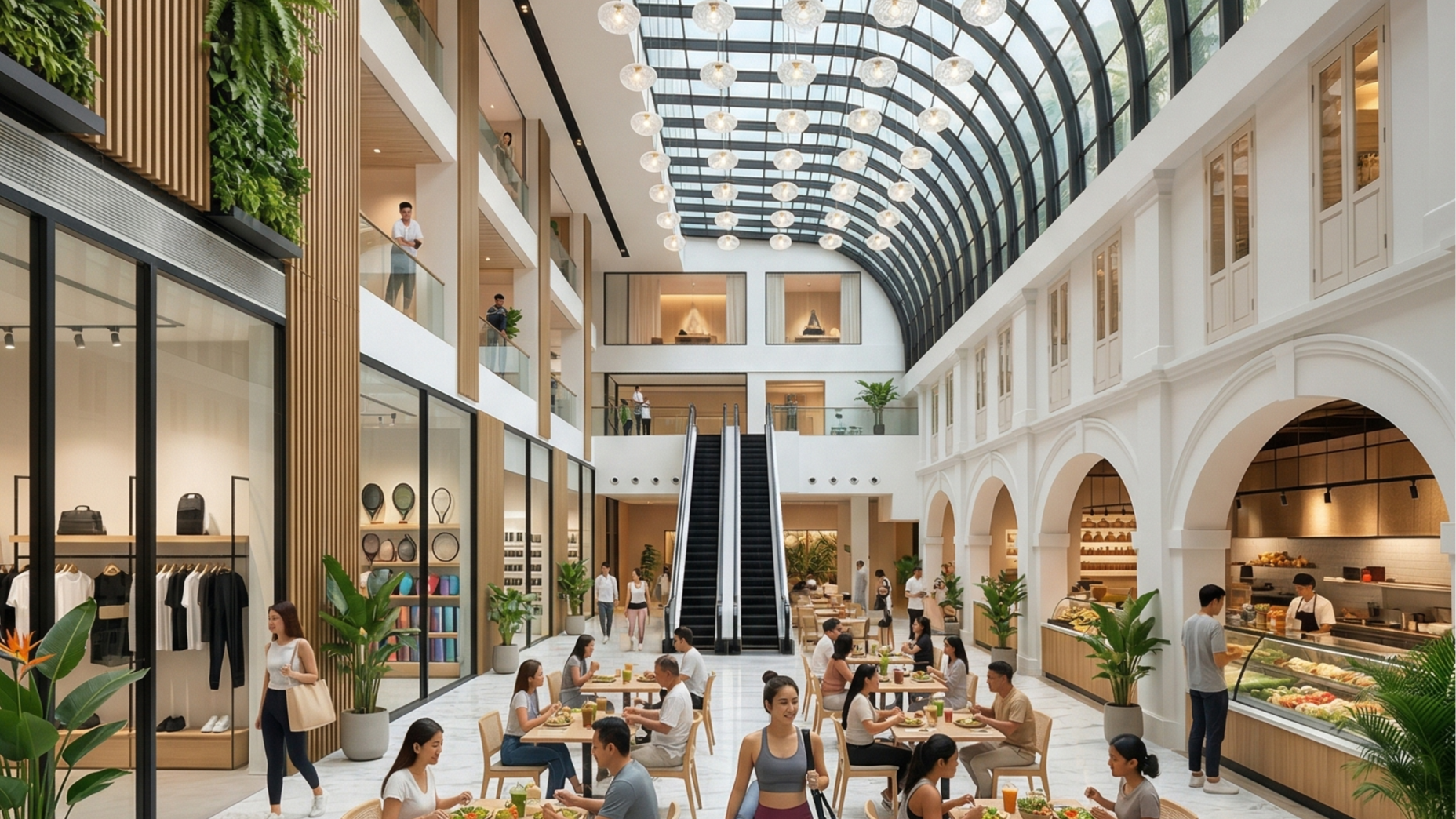
A commercial space gives you four walls and a postcode. A platform gives you a brand context, a community, a shared narrative, and a positioning advantage
Longevity World Singapore: Built Around This Model
Longevity World Singapore was built to close the gap between what preventive and longevity medicine can achieve in isolation and what becomes possible within a fully integrated ecosystem.
Located at 10 Coleman Street in Singapore's Civic District, it is Singapore's and Asia's first ever longevity hub. It brings together practitioners and brands across six pillars: preventive medicine, longevity medicine, movement, nutrition, recovery, and lifestyle.
These are not six separate services in the same building. They are a connected ecosystem where each discipline reinforces the others and referral pathways are built into the model.
The Civic District location is well-placed. City Hall MRT, the Central Business District, premium hotels, and health-conscious residential neighbourhoods are all within close reach. This is the catchment that preventive and longevity medicine practices need to grow.
The regulatory groundwork is already established. The brand context is curated. And the infrastructure for cross-disciplinary referral is part of the operating model from day one.
Why Moving Early Matters
The preventive medicine market in Singapore is in early-growth phase.
The government is investing. Consumer demand is building. The chronic disease burden is creating systemic pressure for a more preventive model.
Practitioners who build within purpose-designed ecosystems now will establish referral networks, patient communities, and brand authority that later entrants cannot replicate.
The data on where this market is heading is consistent across every source. The practitioners making their positioning decisions today are the ones who will define what integrated preventive care looks like in Singapore over the next decade.
What Comes Next
The question for any practitioner in this space is not whether the market will grow. It will.
The question is whether you build within the ecosystem that is defining the category, or whether you build alongside it.
The practitioners who answer that question early are the ones who will look back and recognise that their most important decision was not what service they built, but where they chose to build it.
Learn more and explore the ecosystem at longevity.world/visit-us
Longevity World Singapore is Singapore's and Asia's first ever longevity hub, located at 10 Coleman Street in the Civic District. The ecosystem brings together preventive medicine, longevity medicine, movement, nutrition, recovery, and lifestyle within one integrated platform. For enquiries, visit longevity.world/visit-us.